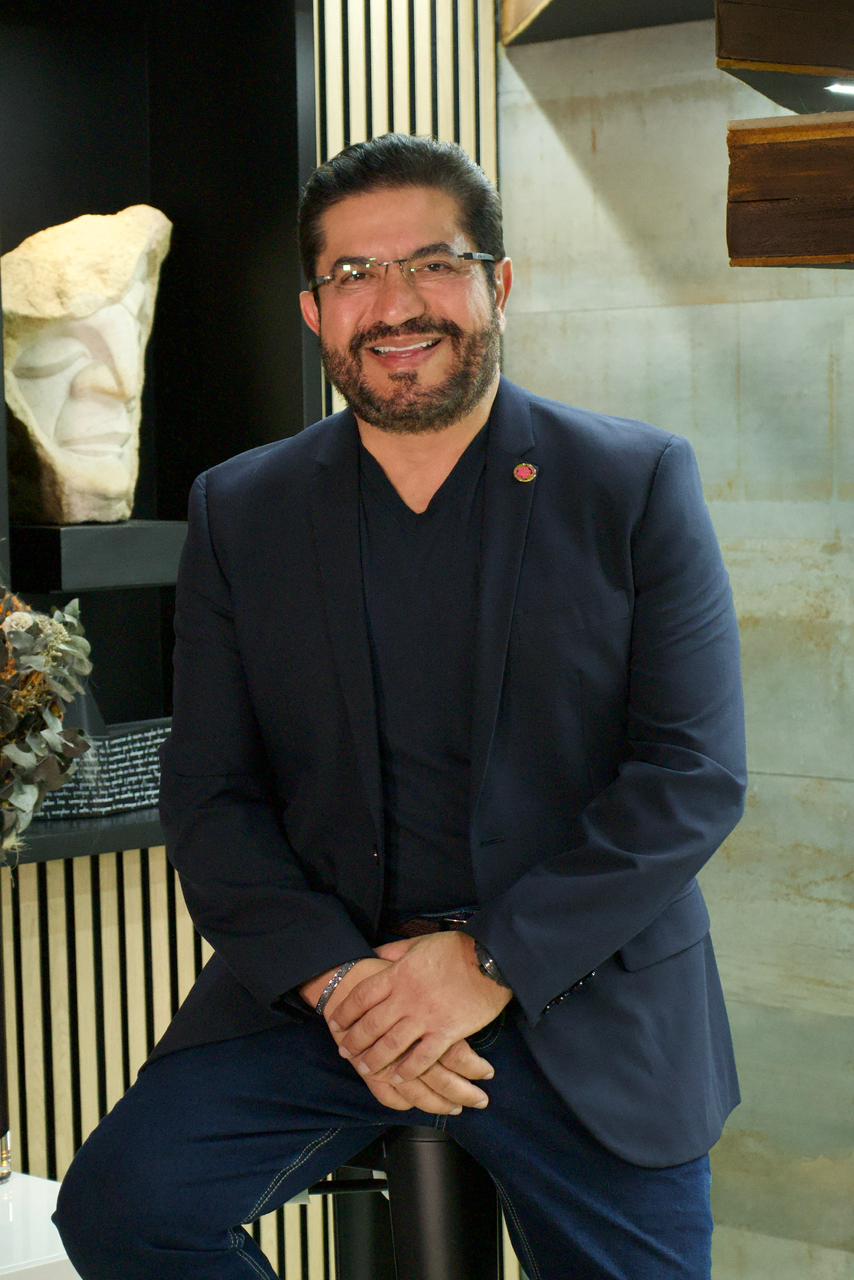
Saad, the surgeon
Before you trust your body to a surgeon, there’s something you should know: who’s behind the white coat.
Get to know me: the doctor, the professional, and the human being who’ll be with you at one of the most important moments of your life. This page isn’t here to convince you of anything. It’s here so you can verify what I say I am, with the numbers you need to do it.
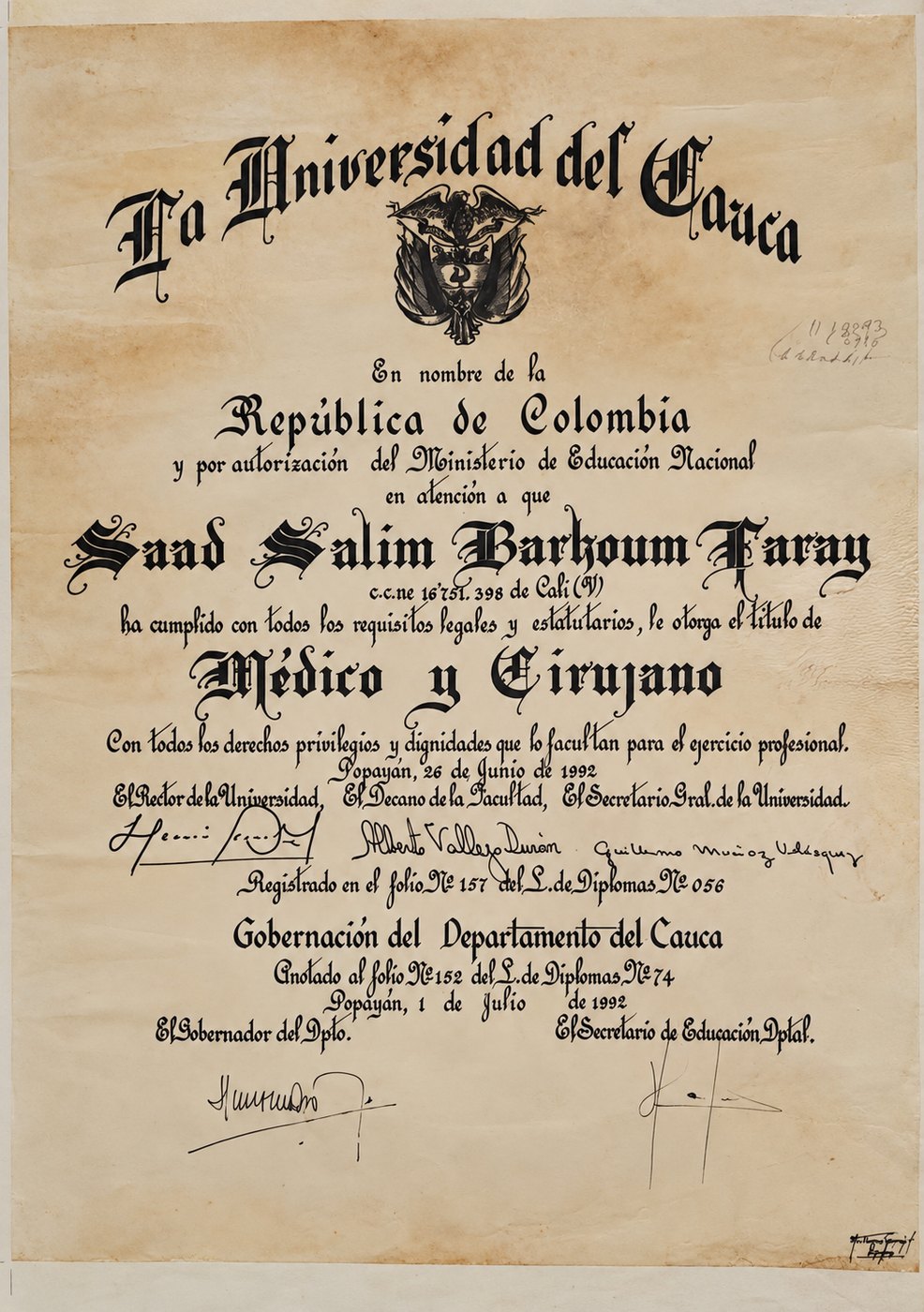
- Physician since 1992. Plastic surgeon since 2003. Two different degrees, eleven years apart.
- I specialized in Brazil, at the Pontifical Catholic University of São Paulo, and came back to Cali.
- Everything on this page can be checked, and below I tell you where.
If you've already checked me out and want to tell me about your case, write to me.
Dr. Saad or his team will reply. No commitment.
Two degrees, with their two dates
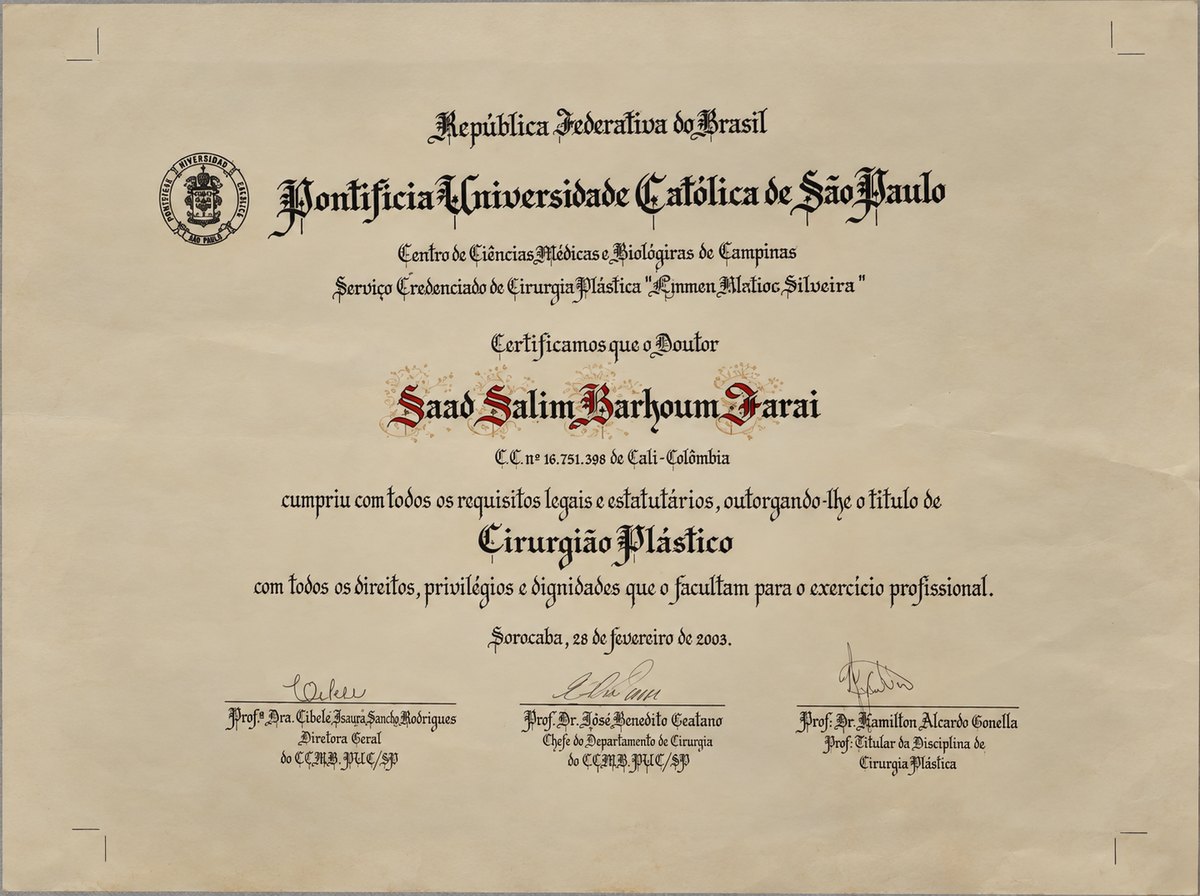
I graduated as a physician and surgeon from the Universidad del Cauca in 1992. I specialized in plastic surgery in 2003, at the Pontifical Catholic University of São Paulo — Campinas and Sorocaba, with a diploma dated February 28, 2003.
There are eleven years between the two. That gap says more than both dates put together.
In February 2003 I came back to Cali and stayed: twenty-three years practicing in the same city, completed in February of this year. I haven’t moved countries or cities looking for something better. And since 2025, I also see patients in Pereira.
Where I trained as a plastic surgeon
I didn’t train on my own. I trained at the Serviço «Linneu Mattos Silveira» of PUC São Paulo, and my specialist diploma is signed by Hamilton Gonella.
I mention it because it changes what everything else means: the technique I developed didn’t come out of nowhere in an office in Cali. It came out of a school of surgery, with a name and a signature.
The technique I developed and its international recognition
Its full name is Mixed Autologous Surgical Technique — superior flap, Wise mastopexy, graft. And I gave it a nickname, which is how everyone knows it: “Plicatura en Puño,” the Closed Fist Surgical Technique in English.
The nickname describes the maneuver, not the operation. Open your hand and look at it: the flap measures two to three centimeters (about an inch). Now close it. Folded over on itself, that same tissue reaches eight to twelve centimeters (roughly 3 to 5 inches). Four times taller. That’s where the volume that replaces the implant comes from — from you, not from a new implant.
It’s for what I’m asked for most: having your implants removed without being left empty.
If that's what you're looking for, write to me and we'll look at it together.
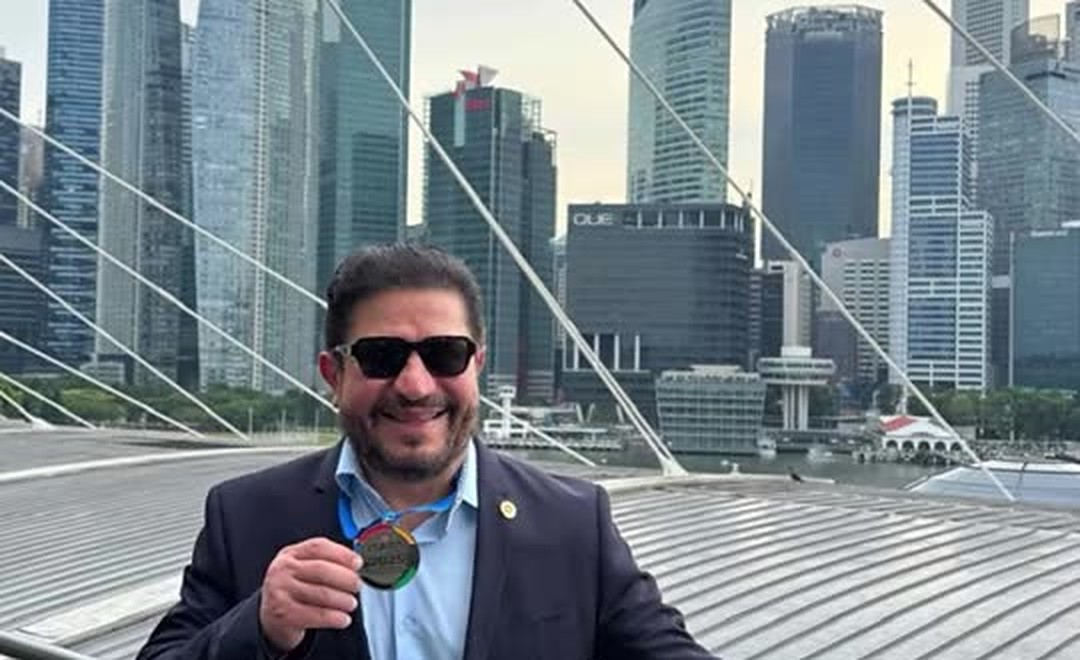
At the ISAPS Olympiad World Congress 2025, in Singapore, I presented a retrospective cohort study on this technique. I won third place in oral presentations on breast surgery.
The certificate reads, word for word: “Saad Barhoum Farai — Bronze Medal for the Oral Communication.”
It’s a bronze medal, in a specific category, at an international congress. No more and no less than that.
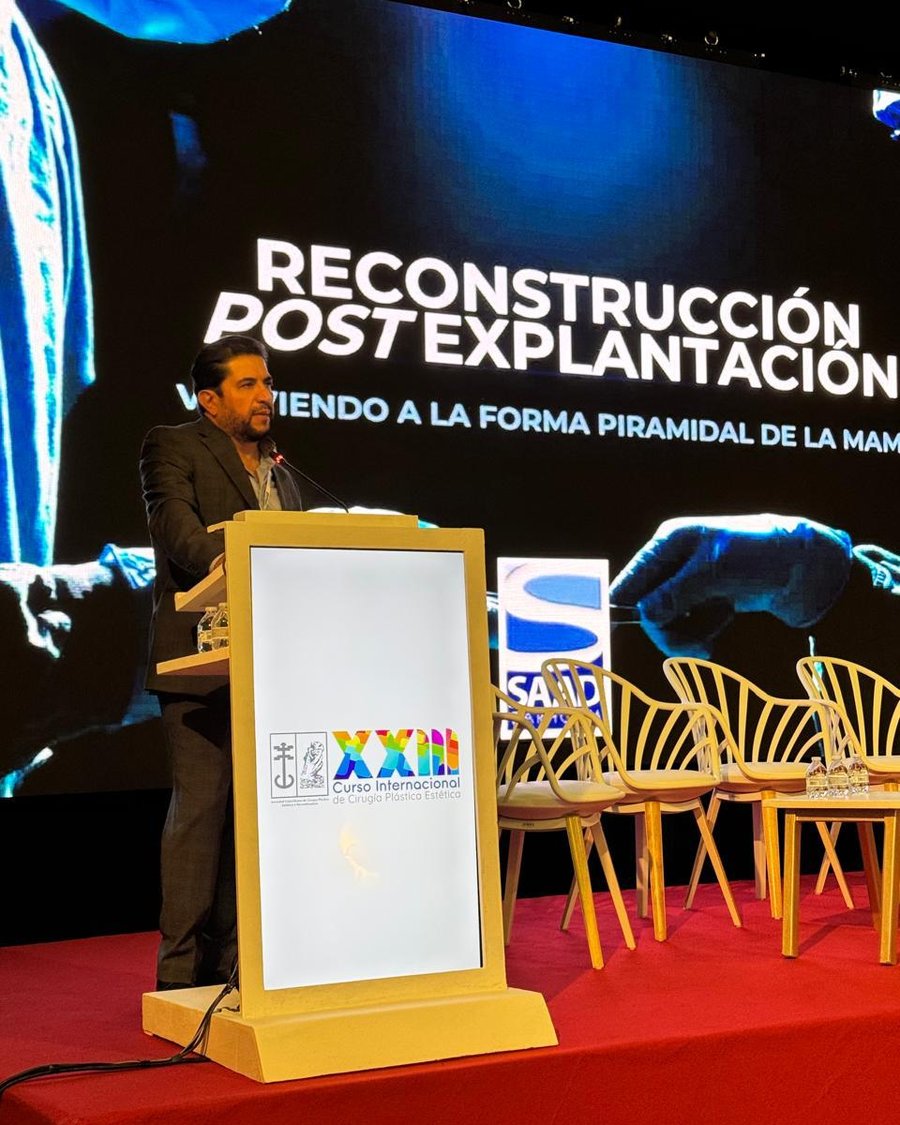
I’ve also taught the technique to other plastic surgeons. At the 23rd International Course of Aesthetic Plastic Surgery, in Barranquilla, from August 27 to 30, 2025, I was a speaker with the talk “Post-explantation reconstruction: returning to the pyramidal shape of the breast.” And in 2023 I was organizer and president of the 22nd International Course of Plastic Surgery in Cali.
Before becoming a plastic surgeon, I worked in intensive care
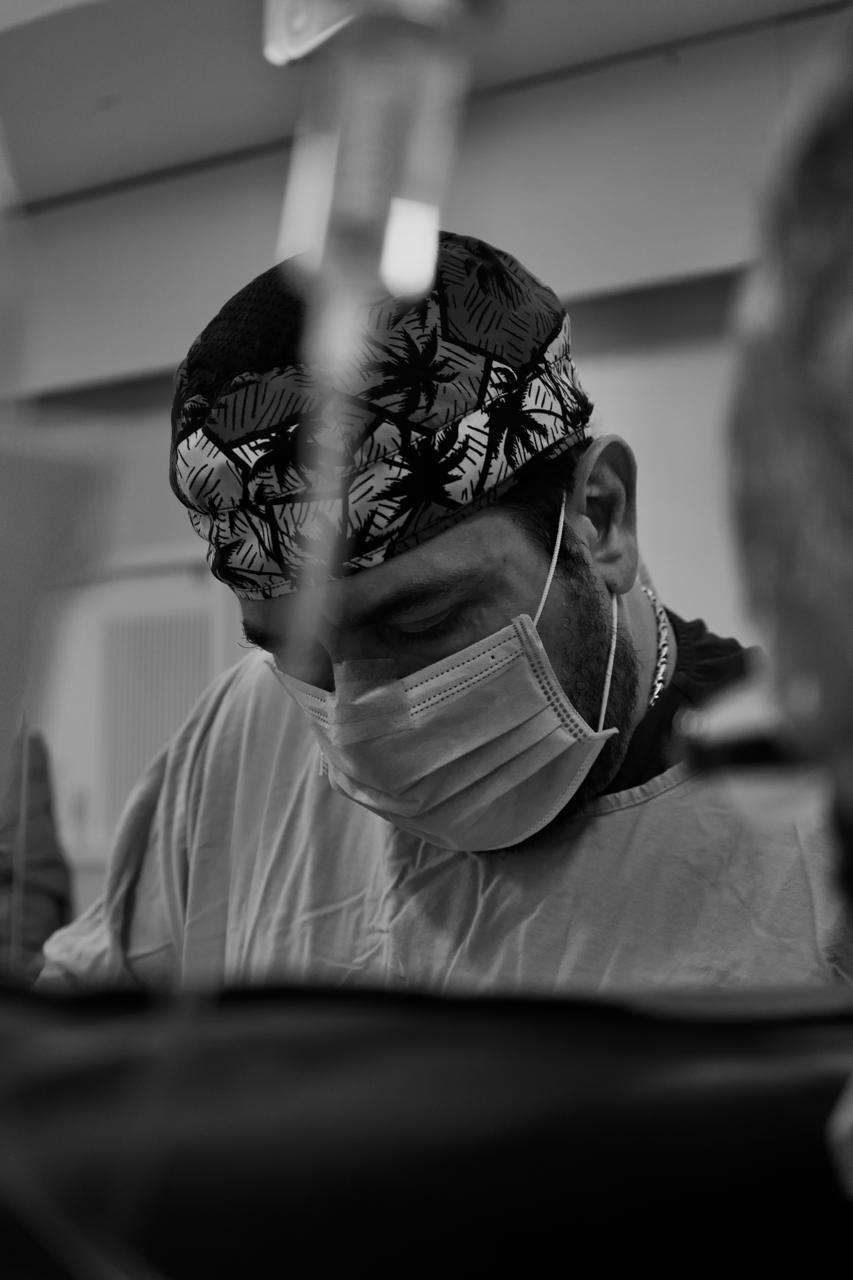
Between my medical degree and my specialty, I worked for four years in intensive care.
I don’t mention it to pad my résumé. I mention it because 98% of my patients arrive afraid, and that fear centers on three things: the scar, the pain, and the anesthesia. The last two aren’t about aesthetics. They’re about what happens if something goes wrong.
Someone who spent four years in intensive care before doing this is exactly who you want there on that day. It’s the part of my training you don’t see, and it only matters when it’s needed.
Our team
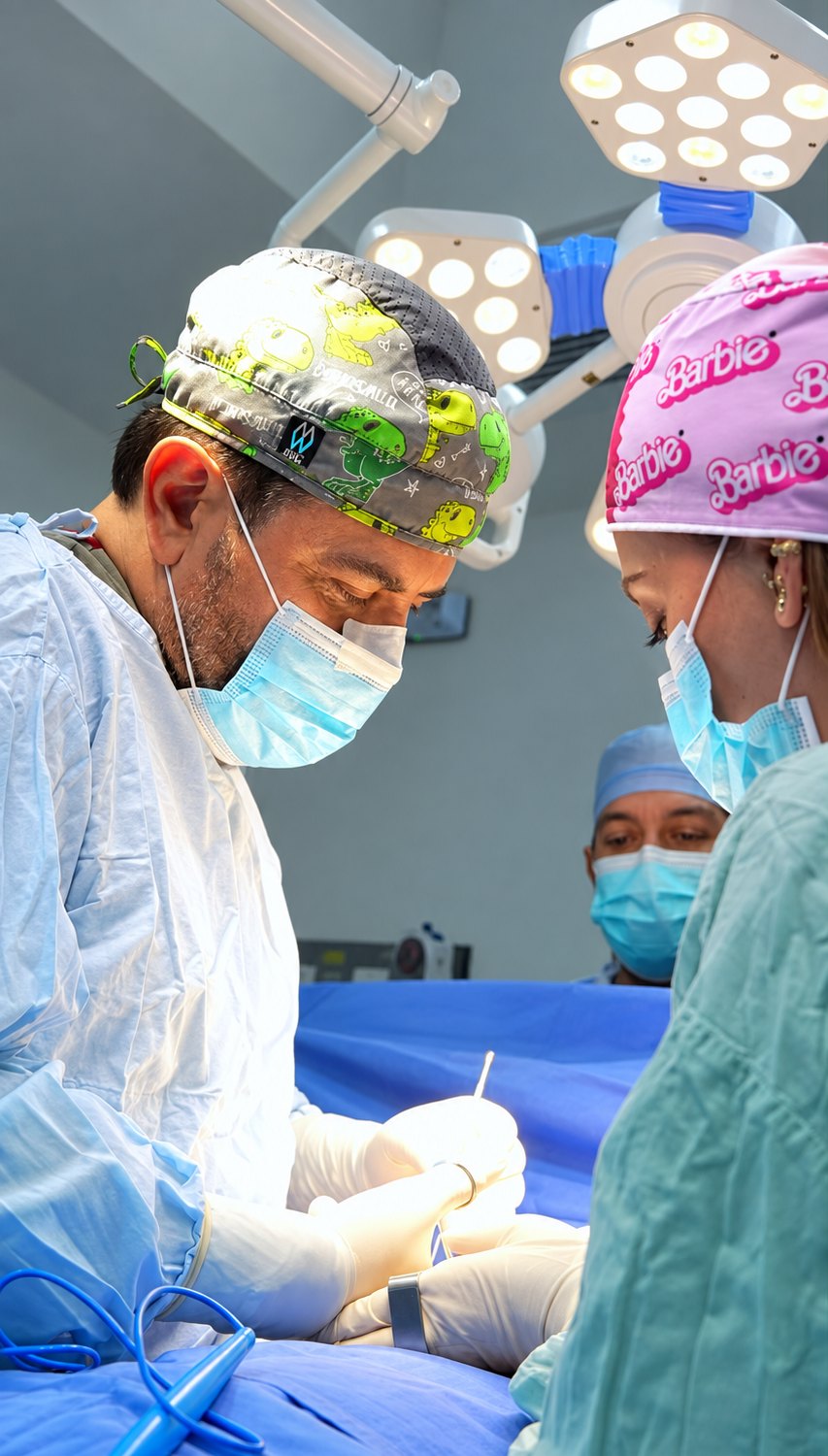
Plastic surgery is much more than technique. It’s preparation, precision, and a team that shares the same commitment: the safety and well-being of every patient.
- A human team. Trained, committed professionals.
- Safety. Rigorous protocols for every procedure.
- Experience. Years of surgical practice behind every decision.
- A human approach. Listening, empathy, and respect for every story.
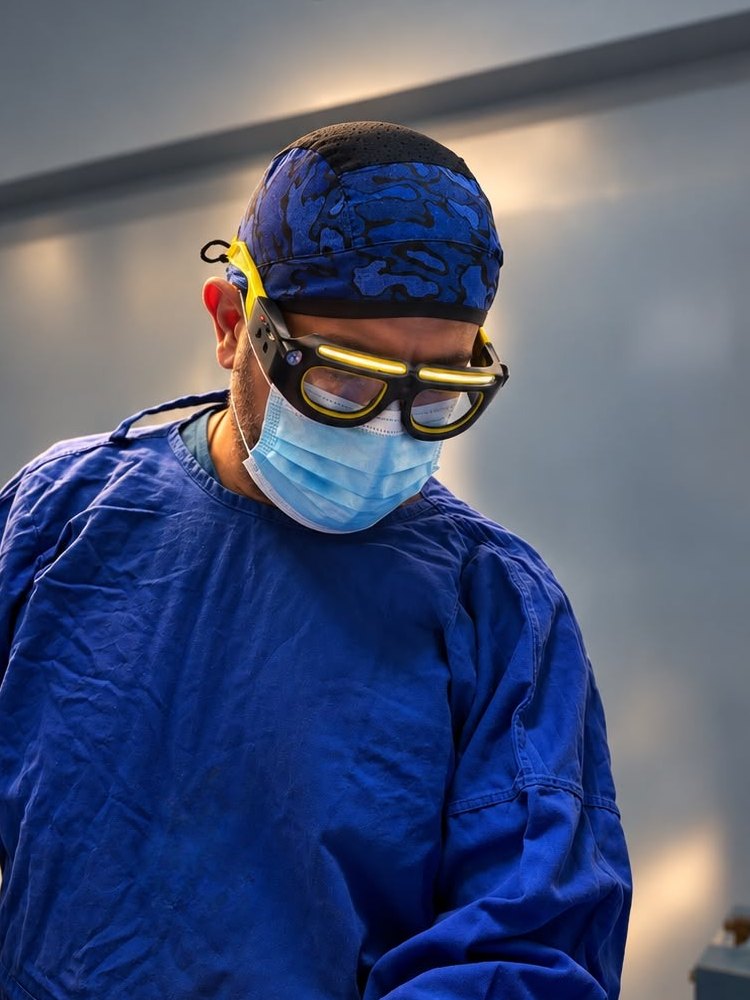
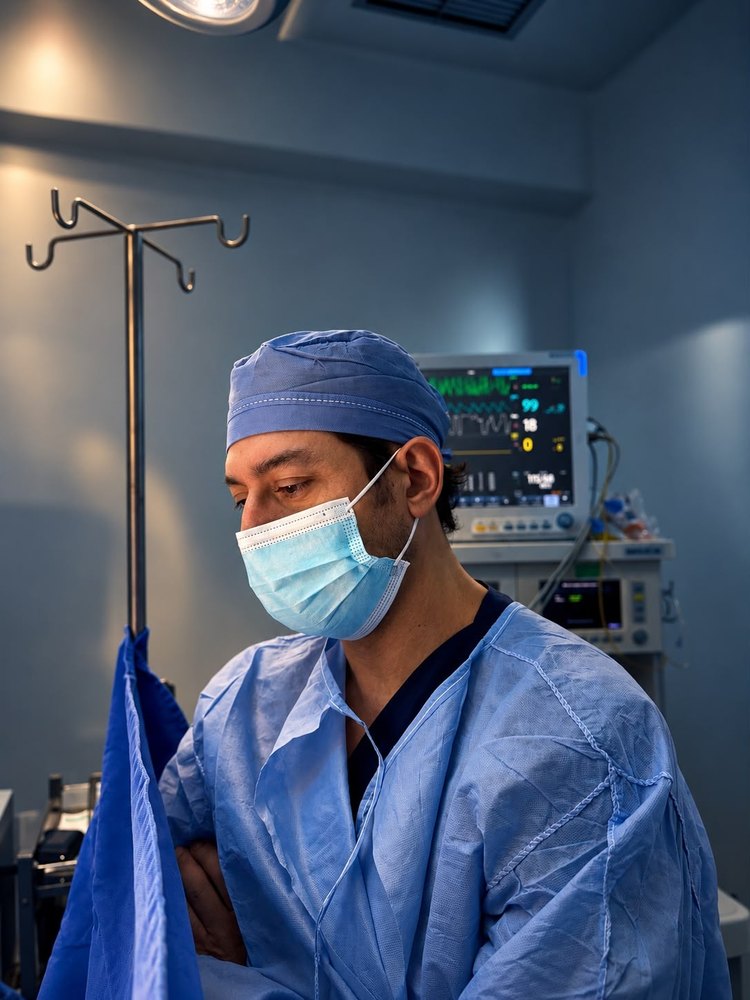
For twenty-three years I’ve been operating with the same brother on the other side of the table.
Dr. Salim Barhoum has worked with me since 2003. Pain management —during surgery and afterward— is the anesthesiologist’s job, and that’s why I’ve worked with the same one for two decades.
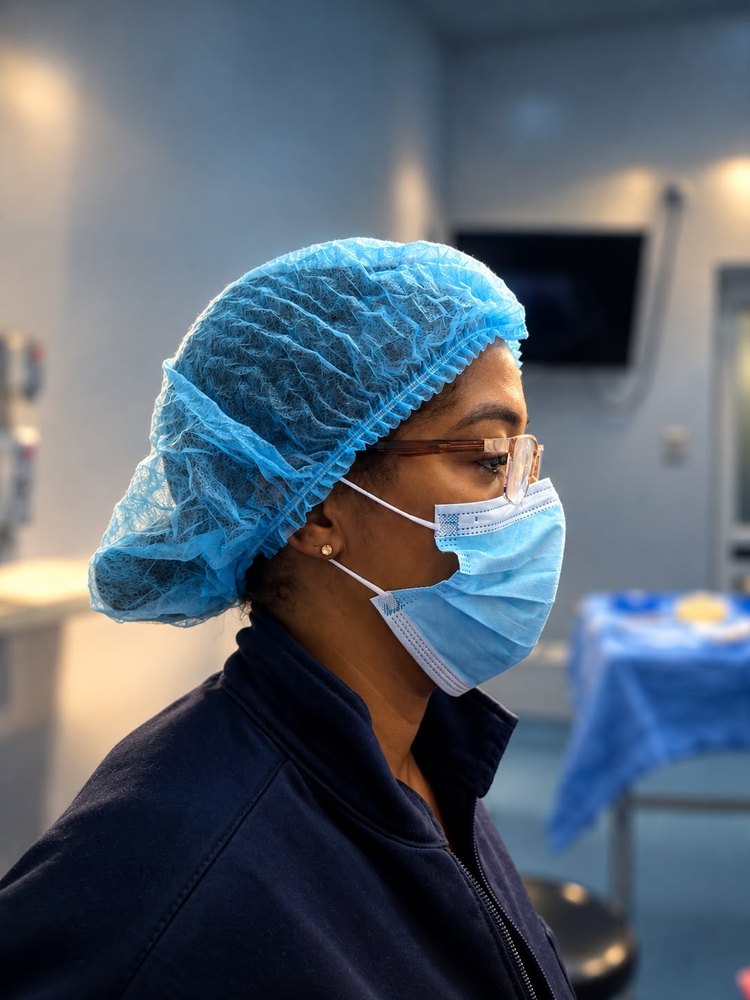
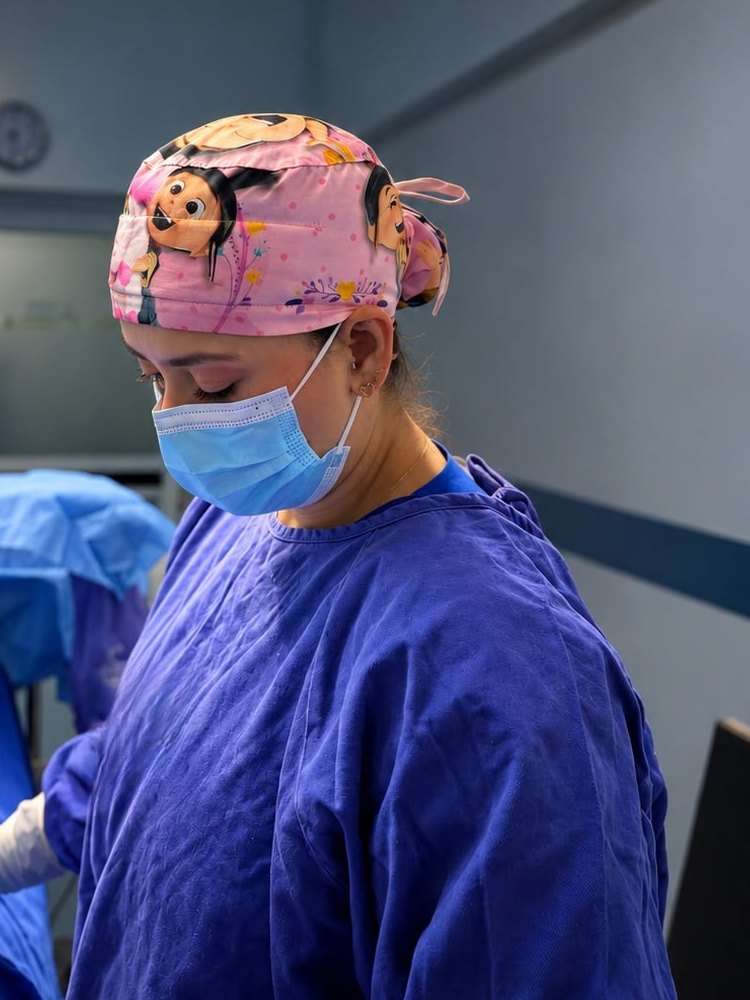
The team you’ll find in the operating room:
- Dr. Salim Barhoum, anesthesiologist. He administers and monitors the anesthesia, watches your vital signs, and stays with you throughout the procedure.
- Ginna Mancilla, surgical assistant. She prepares the surgical setting, coordinates every detail, and works with the team so your surgery is safe, organized, and efficient.
- Lorena García, surgical technologist. She prepares and organizes the instruments, maintains sterile technique, and assists me throughout the operation.
We also have staff who specialize in post-op lymphatic drainage, which is the part of recovery you notice most and hear least about.
Intensive care on one side and twenty-three years with the same team on the other are the same argument said twice: if something goes wrong, there are people here who’ve been there before.
“Behind every result there’s a team that works with excellence, and a purpose that goes beyond surgery: transforming lives.”
Where I operate
I see you for consultations in my office in Cali, and I operate in a clinic. I don’t do any procedure in my office, not even a minor one: it’s for consultations, so I can explain everything calmly before you decide.
I operate in a fourth-level clinic —the highest level of care in Colombia’s health system— with full medical services: inpatient care, emergency, and intensive care. The operating room is certified by the regional Health Department.
I also operate in Pereira, in a clinic of the same level.
How to check me
I’m not asking you to believe me. I’m asking you to look.
The specialty. In Colombia, plastic surgery is a medical specialty of at least four years, certified by the Ministry of Education, and the surgeon must be registered in RETHUS, the national registry of health professionals.
Where to look. There are two places, and neither is mine:
- RETHUS, the official registry of Colombia’s Ministry of Health. It’s searched by ID number, not by name: mine is printed on both diplomas above. Check it here, in RETHUS → (in Spanish)
- The Colombian Society of Plastic Surgery, where I’m listed as a Full Member. See my profile with the Society → (in Spanish)
My provider registration is 7600105110-01.
And if anyone tells you there’s no need to check anything, you already have your answer.
Once you've checked, tell me what's going on.
The next step
If you’ve read this far, you already know more about me than about most of the surgeons you’re considering.
Write to me and tell me what happened. You don’t need to have decided anything. The first conversation isn’t about surgery: it’s about understanding what you have and what can be done about it.